祀、戎
纵观人类历史,是“祀、戎”相见的历史。
祭天、祭地、祭祖先,封禅大典、开国大典,这是“祀”的范畴。
篆书的“祀”,像一个人面对祖先的牌位祷告。
“忘记过去,就意味着背叛”。
中华文明之所以数千年传承不朽,与我们的祭祀观有必然的联系。
因为,祭祀的对象不只是神明、祖先,还有英烈、楷模。
正是前辈们开创的优秀文明和传统,感召了一代又一代国人的振奋进取。
文者,如孔孟;武者,如关公;
仕者,如比干、屈原;农者,如神农、后稷;
工者,如墨子、鲁班;商者,如范蠡、子贡。
“祀”的异体字有把“巳”换成“冀”,有“希冀”的意思,也就是希望。
祭祀的过程,祷告是形式,目的是“希望”,获得神明祖先的指引,强化“祀”者的信心。
老人家曾教导我们,“我们的同志在困难的时候,要看到光明,要看到希望,要增加我们奋斗的勇气!”
现在我们常说,生活要有仪式感。
因为仪式感,会让我们对未来充满信心,充满希望。
戎,与战争武器有关,是“干戈”二字的合体。
中国有句古话叫“化干戈为玉帛”。
我们之所以发展核弹、航母、天眼等国之重器,就是为了提升战斗力,提升抗打击能力,以高精尖的武器,捍卫祖国和平发展。
“武”字的本意就是“止戈”,也就是停止战斗,不战而胜!
《孙子兵法》说“兵者,国之大事,死生之地,存亡之道,不可不察!”
繁体“國”(国)字由“口戈一口”组成,其含义是“围墙、军队、土地、人口”。
外面的大“囗”代表领土范围。
里面的“或”中的小“口”代表人口(士兵或军队),而“一”,则表示土地;
捍卫领土,保家卫国,还要有手拿“戈”矛的军队!
《卜辞文字小记》:“囗象域形,从戈以守之,国之义也。”
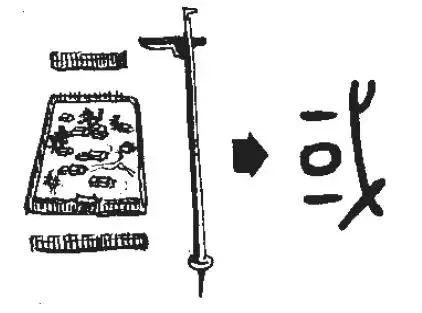
爱好和平,必须铸就钢铁长城来捍卫和平。
《左传·成公·成公十三年》
【经】十有三年春,晋侯使郤錡来乞师。三月,公如京师。夏五月,公自京师,遂会晋侯、齐侯、宋公、卫侯、郑伯、曹伯、邾人、滕人伐秦。曹伯卢卒于师。秋七月,公至自伐秦。冬,葬曹宣公。
【传】十三年春,晋侯使郤錡来乞师,将事不敬。孟献子曰:「郤氏其亡乎!礼,身之干也。敬,身之基也。郤子无基。且先君之嗣卿也,受命以求师,将社稷是卫,而惰,弃君命也。不亡何为?」
三月,公如京师。宣伯欲赐,请先使,王以行人之礼礼焉。孟献子从。王以为介,而重贿之。
公及诸侯朝王,遂从刘康公、成肃公会晋侯伐秦。成子受脤于社,不敬。刘子曰:「吾闻之,民受天地之中以生,所谓命也。是以有动作礼义威仪之则,以定命也。能者养以之福,不能者败以取祸。是故君子勤礼,小人尽力,勤礼莫如致敬,尽力莫如敦笃。敬在养神,笃在守业。国之大事,在祀与戎,祀有执膰,戎有受脤,神之大节也。今成子惰,弃其命矣,其不反乎?」
Duke Cheng, year 13, 577 B.C.
(Legge, p. 379, col. 6 & p. 381, col. 2)
Proper conduct in the two great affairs of state: sacrifice and war
When the duke [of Lu] was going to the capital, Xuan Bo, wishing to obtain gifts [from the king], begged to be sent on beforehand. The king, however, received him [only] with the ceremonies due an envoy. Meng Xian Zi came on in attendance [on the duke], and the king considered him to be the duke’s director for the visit and gave him large presents. The duke and the other princes had an audience with the king, and then followed duke Kang of Liu and duke Su of Cheng to join the marquis of Jin in the invasion of Qin.
When the viscount of Cheng received the flesh of the sacrifice at the altar of the land, his manner was not respectful. The viscount of Liu said, “I have heard that men receive at birth the exact and correct principles of Heaven and Earth, and these are what is called their appointed [nature]. There are the rules of action, propriety, righteousness, and demeanor, to establish this nature. Men of ability nourish those rules so as to secure blessing, while those devoid of ability violate them so as to bring on themselves calamity. Therefore superior men diligently attend to the rules of propriety, and men in an inferior position do their best. In regard to the rules of propriety, there is nothing like using the greatest respectfulness. In doing one’s best, there is nothing like being earnestly sincere. That respectfulness consists in nourishing one’s spirit [SHEN]; that earnestness, in keeping one’s duties in life. The great affairs of a state are sacrifice and war. At sacrifices [in the ancestral temple], [the officers] receive the roasted flesh; in war they receive that offered at the altar of the land. These are the great ceremonies in worshipping the Spirits [SHEN]. Now the viscount of Cheng by his lazy rudeness has cast from him his proper nature. May we suppose that he will not return from this expedition?”